
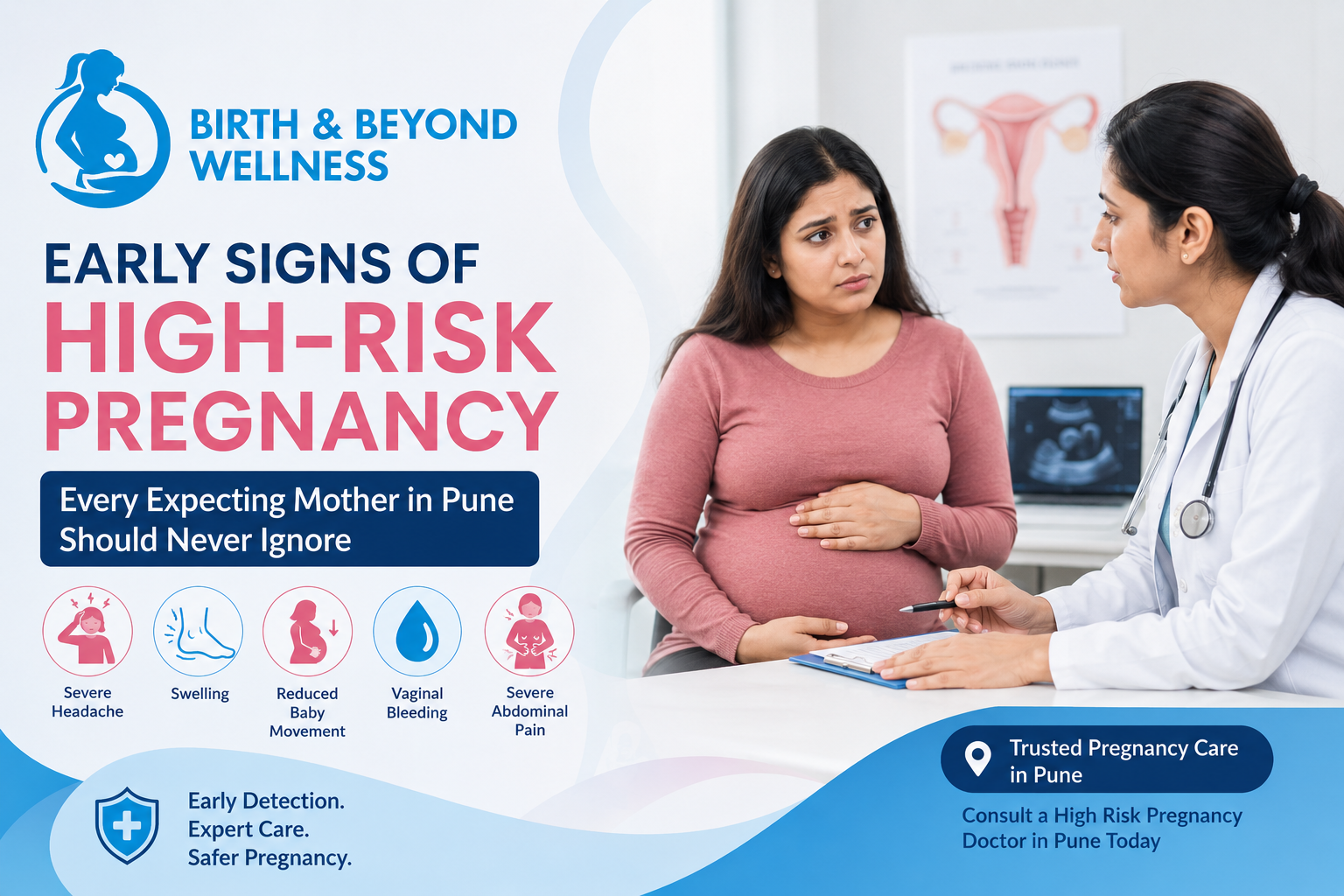
Early Signs of High-Risk Pregnancy Every Expecting Mother in Pune Should Never Ignore Recent post Early Signs of High-Risk Pregnancy Every Expecting Mother in Pune Should Never Ignore Can Delaying Pregnancy Affect Fertility? What Every Couple Should Know Menopause: Symptoms, Lifestyle Changes & Treatment Options Irregular Periods: Causes, Treatment & When to See a Gynecologist Uncategorized June 22, 2026 Dr. Navin Pregnancy is an exciting and life-changing journey, but it also requires careful monitoring to ensure both mother and baby remain healthy. While many pregnancies progress normally, some women may develop conditions that make their pregnancy high-risk. Recognizing these warning signs early and consulting a High Risk Pregnancy Doctor in Pune can help prevent serious complications. High-risk pregnancy does not necessarily mean something will go wrong. It simply means extra care, regular monitoring, and timely intervention may be needed to achieve a safe delivery. What Is a High-Risk Pregnancy? A high-risk pregnancy occurs when the mother, baby, or both have an increased chance of developing health complications before, during, or after childbirth. Several factors can contribute to a high-risk pregnancy, including: Pregnancy after the age of 35 High blood pressure Diabetes Thyroid disorders Obesity Multiple pregnancies (twins or triplets) Previous pregnancy complications Autoimmune disorders Lifestyle factors such as smoking or alcohol consumption However, even healthy women can unexpectedly develop complications during pregnancy. Early Signs You Should Never Ignore 1. Severe Headaches That Do Not Go Away Occasional headaches are common during pregnancy due to hormonal changes. However, persistent or severe headaches could indicate elevated blood pressure or preeclampsia, a serious pregnancy condition requiring immediate medical attention. If headaches are accompanied by blurred vision or swelling, consult a doctor immediately. 2. Excessive Swelling of Hands, Feet, or Face Mild swelling is normal during pregnancy. However, sudden or severe swelling may signal underlying complications, especially if it occurs alongside headaches or dizziness. This could be an early sign of preeclampsia. 3. Reduced Baby Movement Most mothers start feeling fetal movements between 18 and 25 weeks of pregnancy. If you notice a sudden decrease in your baby’s movement patterns, do not ignore it. Reduced fetal movement should always be evaluated promptly. 4. Vaginal Bleeding Any amount of bleeding during pregnancy should be taken seriously. Possible causes include: Placenta previa Placental abruption Cervical issues Risk of miscarriage Seek medical advice immediately if bleeding occurs. 5. Severe Abdominal Pain Mild discomfort can be normal as your body changes. However, intense or persistent abdominal pain is not normal and requires urgent evaluation. This symptom may indicate infections, placental issues, or premature labor. 6. High Fever A fever above 100.4°F (38°C) during pregnancy could indicate an infection that may affect both mother and baby. Prompt treatment is important to avoid complications. 7. Shortness of Breath or Chest Pain Breathlessness is common later in pregnancy, but sudden difficulty breathing, chest pain, or rapid heartbeat should never be ignored. These symptoms may indicate serious cardiovascular or respiratory concerns. Who Is More Likely to Have a High-Risk Pregnancy? Women with the following conditions should schedule regular prenatal visits: Existing diabetes High blood pressure Kidney disease Thyroid disorders PCOS Previous miscarriages Previous C-section deliveries Family history of pregnancy complications Early identification allows doctors to create personalized pregnancy care plans. How Can High-Risk Pregnancy Be Managed? Proper prenatal care significantly reduces complications. Management may include: Regular ultrasounds Frequent blood pressure monitoring Blood sugar management Nutritional guidance Fetal growth assessments Lifestyle modifications Specialist consultations when needed Never skip your scheduled antenatal appointments, even if you feel healthy. When Should You Consult a Doctor? Do not wait for symptoms to become severe. Early intervention often leads to better outcomes for both mother and baby. If you experience unusual symptoms, persistent discomfort, or simply have concerns about your pregnancy, seeking expert medical advice is always the safest decision. Your Pregnancy Deserves Expert Care Every pregnancy is unique. Timely diagnosis, regular monitoring, and expert guidance can make a significant difference in ensuring a healthy mother and baby. Visit Birth & Beyond Wellness, Pune At Birth & Beyond Wellness, our team provides comprehensive pregnancy care, including specialized management for high-risk pregnancies. We focus on personalized care plans, advanced monitoring, and compassionate support throughout your motherhood journey. If you are looking for a High Risk Pregnancy Doctor in Pune, schedule a consultation and ensure you receive the right care at every stage of your pregnancy.
PCOS vs PCOD: What Is the Difference and When Should Women in Pune Seek Treatment?
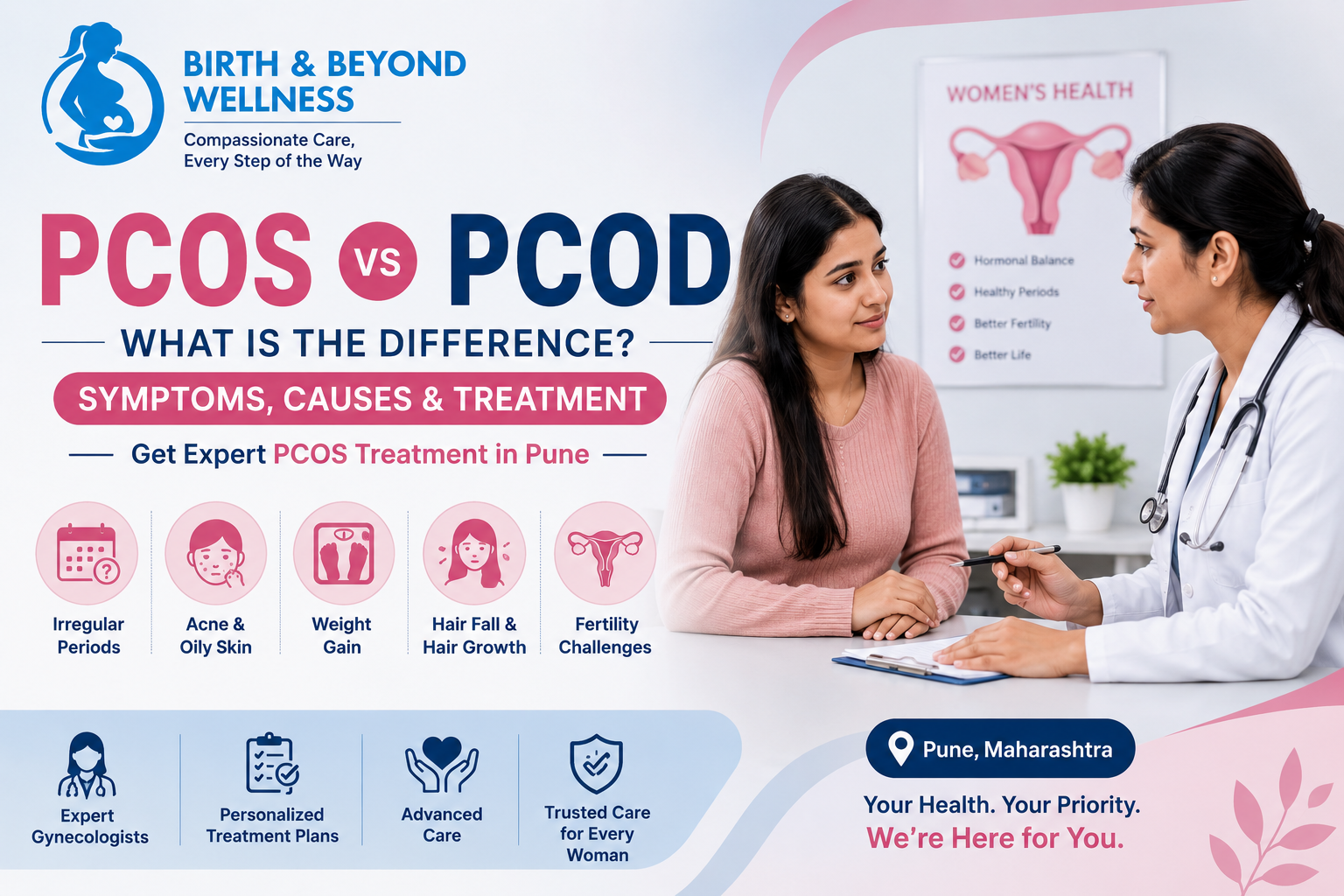
PCOS vs PCOD: What Is the Difference and When Should Women in Pune Seek Treatment? Recent post Early Signs of High-Risk Pregnancy Every Expecting Mother in Pune Should Never Ignore PCOS vs PCOD: What Is the Difference and When Should Women in Pune Seek Treatment? Can Delaying Pregnancy Affect Fertility? What Every Couple Should Know Menopause: Symptoms, Lifestyle Changes & Treatment Options Irregular Periods: Causes, Treatment & When to See a Gynecologist Uncategorized June 17, 2026 Dr. Navin Many women use the terms PCOS and PCOD interchangeably, but they are not exactly the same. Both conditions affect the ovaries and hormonal balance, yet they differ in severity, causes, and long-term health implications. With increasingly sedentary lifestyles, stress, poor sleep habits, and dietary changes, cases of PCOS and PCOD are rising among women in India. Seeking timely PCOS Treatment in Pune can help manage symptoms effectively and prevent future complications. Understanding these conditions can help women make informed decisions about their reproductive and overall health. What Is PCOD? PCOD (Polycystic Ovarian Disease) is a condition where the ovaries produce immature or partially mature eggs, which eventually turn into cysts over time. Women with PCOD may experience hormonal imbalances that can interfere with normal ovulation. PCOD is relatively common and can often be managed effectively through lifestyle modifications. What Is PCOS? PCOS (Polycystic Ovary Syndrome) is a metabolic and hormonal disorder that affects ovulation, fertility, and overall health. In PCOS, the ovaries produce higher-than-normal levels of male hormones called androgens. This can disrupt the menstrual cycle and affect multiple systems in the body. PCOS is generally considered more serious than PCOD because it may increase the risk of long-term health complications. PCOS vs PCOD: Key Differences PCOD PCOS Ovaries produce immature eggs Hormonal imbalance affects ovulation Less severe condition More complex endocrine disorder Lifestyle changes often improve symptoms Requires long-term medical management Fertility may be mildly affected Fertility can be significantly impacted Lower risk of associated diseases Higher risk of diabetes and heart disease Common Symptoms Women Should Not Ignore Whether it is PCOS or PCOD, several symptoms may indicate an underlying hormonal imbalance. Watch out for: Irregular or missed periods Excessive facial or body hair growth Persistent acne Sudden weight gain Difficulty losing weight Hair thinning or hair loss Darkening of skin around the neck Mood swings Difficulty conceiving Many women ignore these symptoms for years, assuming they are normal. Early diagnosis can make treatment easier and more effective. What Causes PCOS and PCOD? Several factors may contribute to these conditions. Common causes include: Hormonal Imbalance An imbalance in reproductive hormones can disrupt ovulation. Insulin Resistance Many women with PCOS have insulin resistance, causing elevated blood sugar levels. Genetics Family history may increase your chances of developing these conditions. Lifestyle Factors Lack of exercise, unhealthy eating habits, poor sleep, and chronic stress can worsen symptoms. When Should Women in Pune Seek Treatment? You should consult a doctor if: Your periods are consistently irregular You are struggling to conceive You are experiencing unexplained weight gain Acne persists despite treatment Facial hair growth is increasing You notice significant hair loss Early intervention helps prevent future complications such as: Infertility Type 2 diabetes High blood pressure Sleep disorders Heart disease Pregnancy complications How Are PCOS and PCOD Treated? Treatment depends on your symptoms, age, and future pregnancy plans. Management may include: Personalized diet plans Regular exercise routines Weight management programs Hormonal medications Ovulation support treatments Fertility guidance Regular monitoring Consistency is the key to successful management. Take Control of Your Hormonal Health Ignoring irregular periods or hormonal symptoms can impact your long-term health. The sooner these conditions are diagnosed, the easier they become to manage. Expert Women’s Healthcare at Birth & Beyond Wellness, Pune At Birth & Beyond Wellness, we provide comprehensive diagnosis, personalized treatment plans, and compassionate care for women dealing with hormonal imbalances, fertility concerns, and reproductive health conditions. If you are looking for PCOS Treatment in Pune, schedule a consultation and take the first step toward better hormonal and reproductive health.
Normal Delivery vs C-Section: How Doctors in Pune Decide the Safest Option for Mother and Baby
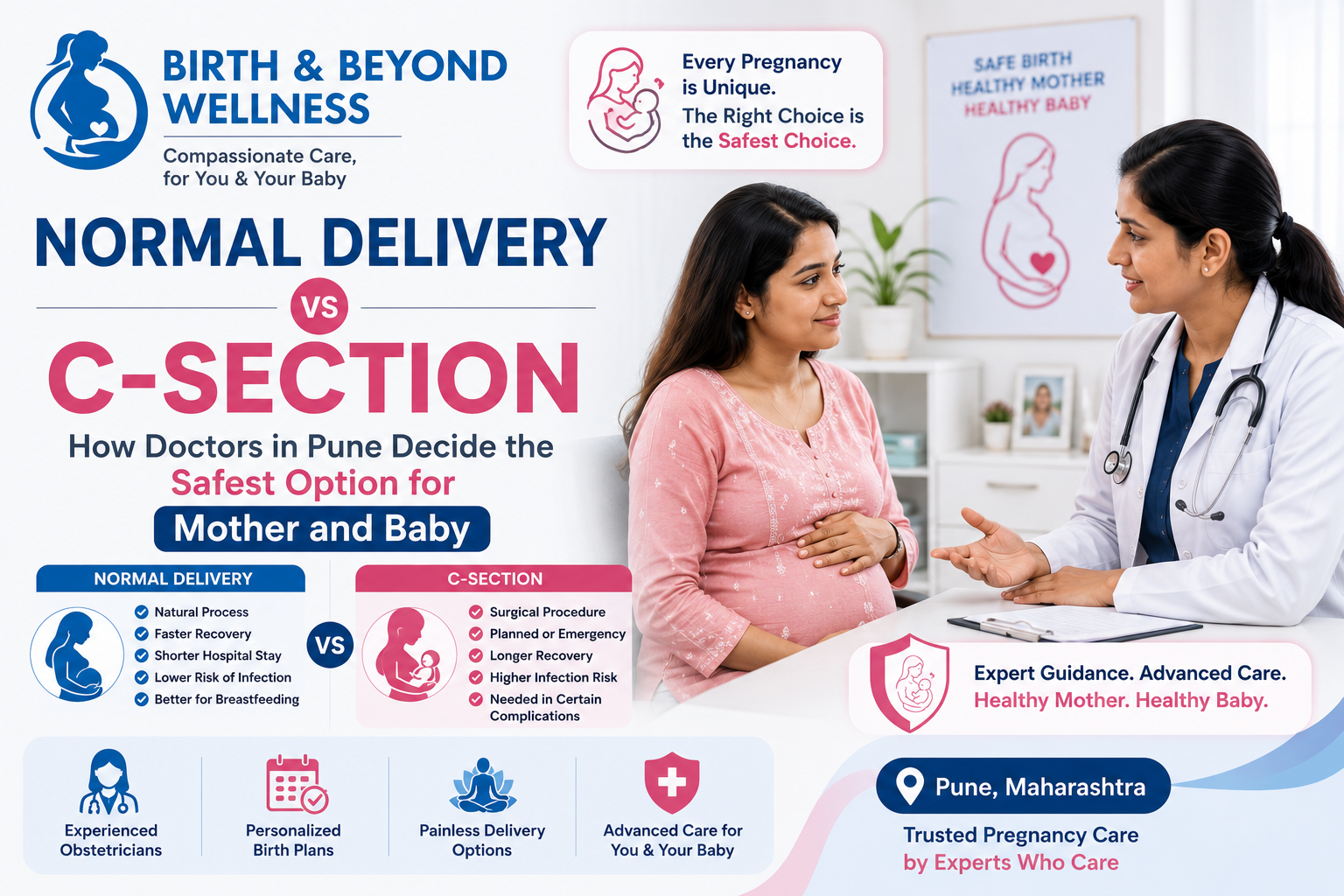
Normal Delivery vs C-Section: How Doctors in Pune Decide the Safest Option for Mother and Baby Recent post Early Signs of High-Risk Pregnancy Every Expecting Mother in Pune Should Never Ignore PCOS vs PCOD: What Is the Difference and When Should Women in Pune Seek Treatment? Normal Delivery vs C-Section: How Doctors in Pune Decide the Safest Option for Mother and Baby Can Delaying Pregnancy Affect Fertility? What Every Couple Should Know Menopause: Symptoms, Lifestyle Changes & Treatment Options Gynecology Services June 7, 2026 Dr. Navin One of the biggest questions expecting mothers have during pregnancy is whether they will have a normal delivery or require a C-section. While many women prefer normal delivery due to faster recovery, there are situations where a cesarean section becomes the safest option for both mother and baby. The decision is never based on personal preference alone. It depends on several medical factors evaluated throughout pregnancy and during labor. Consulting an experienced Normal Delivery Doctor in Pune can help you understand your options and prepare for a safe childbirth experience. Every pregnancy is unique, and the ultimate goal is always a healthy mother and a healthy baby. What Is a Normal Delivery? A normal delivery, also known as vaginal birth, is the natural process of delivering a baby through the birth canal without major surgery. Benefits of normal delivery include: Faster recovery time Shorter hospital stay Lower risk of infection Easier initiation of breastfeeding Reduced surgical complications Faster return to daily activities However, not every woman is a suitable candidate for normal delivery. What Is a C-Section? A cesarean section (C-section) is a surgical procedure in which the baby is delivered through an incision made in the mother’s abdomen and uterus. A C-section may be planned in advance or performed as an emergency procedure during labor. Doctors recommend it only when vaginal delivery could pose risks to the mother or baby. How Do Doctors Decide Between Normal Delivery and C-Section? Several factors are evaluated before making this decision. 1. Baby’s Position Ideally, babies should be positioned head-down before delivery. If the baby is: Breech (feet first) Transverse (sideways) A C-section may be recommended. 2. Mother’s Overall Health Certain medical conditions may make normal delivery unsafe. Examples include: Uncontrolled high blood pressure Severe diabetes Certain heart conditions Placenta-related complications 3. Baby’s Size If the baby is significantly larger than average, doctors may suggest a C-section to avoid complications during labor. 4. Previous C-Section History Women who have had previous C-sections may sometimes be candidates for vaginal birth after cesarean (VBAC), but this depends on individual circumstances. 5. Labor Progress Sometimes labor does not progress normally. Doctors monitor: Cervical dilation Frequency of contractions Baby’s heart rate Mother’s condition If labor stalls or complications arise, an emergency C-section may be necessary. Can You Increase Your Chances of Normal Delivery? Yes. While no one can guarantee a normal delivery, healthy habits can improve your chances. Doctors often recommend: Regular prenatal checkups Maintaining a healthy pregnancy weight Staying physically active Eating a balanced diet Practicing breathing exercises Attending childbirth education classes Managing pregnancy-related conditions early Proper preparation can positively impact labor and delivery outcomes. Is Painless Delivery an Option? Many hospitals now offer painless delivery techniques such as epidural anesthesia. Painless delivery can help reduce labor pain while allowing mothers to remain awake and actively participate in childbirth. Discussing these options early with your doctor can help you create a personalized birth plan. Which Option Is Safer? Neither normal delivery nor C-section is universally better. The safest option is the one that protects both mother and baby based on medical evaluation. Avoid comparing your pregnancy journey with others. Every woman experiences pregnancy differently. Trust your doctor and focus on maintaining a healthy pregnancy rather than becoming fixated on a specific delivery method. Expert Pregnancy Care at Birth & Beyond Wellness, Pune At Birth & Beyond Wellness, we believe every mother deserves compassionate and personalized maternity care. Our team carefully monitors every stage of pregnancy and helps mothers make informed decisions regarding childbirth. Whether you are planning for normal delivery, exploring painless delivery options, or require specialized pregnancy support, we are here to guide you throughout your journey. If you are looking for a trusted Normal Delivery Doctor in Pune, schedule a consultation with Birth & Beyond Wellness and experience expert maternity care designed around your needs.
Can Delaying Pregnancy Affect Fertility? What Every Couple Should Know
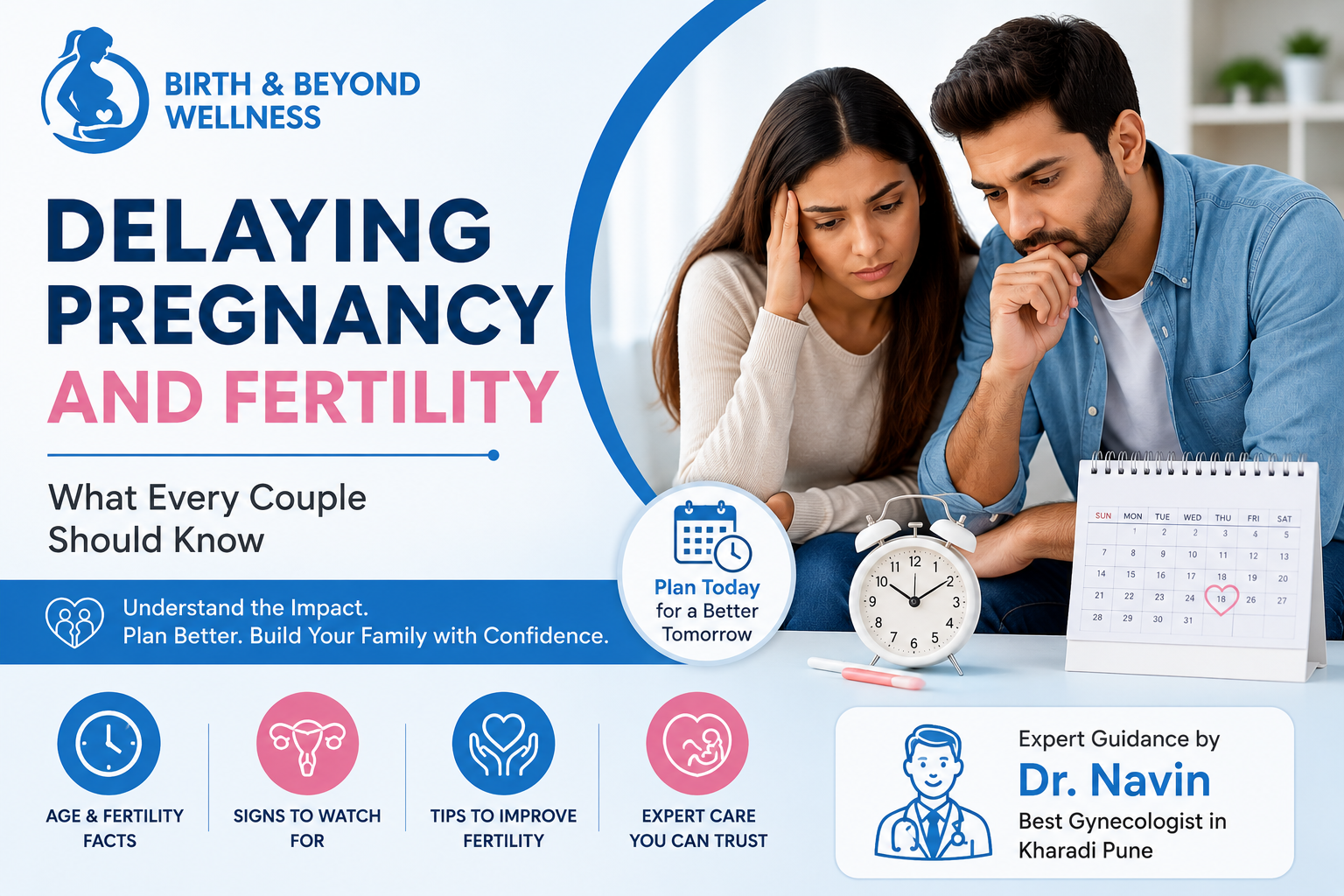
Can Delaying Pregnancy Affect Fertility? What Every Couple Should Know Recent post Can Delaying Pregnancy Affect Fertility? What Every Couple Should Know Menopause: Symptoms, Lifestyle Changes & Treatment Options Irregular Periods: Causes, Treatment & When to See a Gynecologist Gynecology Services May 26, 2026 Dr. Navin In today’s fast-paced lifestyle, many couples choose to delay pregnancy due to career goals, financial planning, personal aspirations, or late marriages. While family planning is a personal decision, it is important to understand how age can affect fertility in both women and men. Many couples assume pregnancy will happen naturally whenever they decide, but fertility gradually declines with age. Understanding the impact of delaying pregnancy and fertility can help couples make informed decisions and seek timely medical guidance if needed. This guide explains how delaying pregnancy affects fertility, possible risks, warning signs, and when to consult a fertility specialist. How Age Affects Female Fertility Women are born with a fixed number of eggs, and both the quantity and quality decrease over time. Fertility in the 20s The 20s are considered the most fertile reproductive years. Egg quality is generally healthy, and the chances of natural conception are higher. Fertility in the Early 30s Fertility slowly starts declining after age 30. Most women can still conceive naturally, but it may take longer compared to their 20s. Fertility After 35 After 35, fertility declines more rapidly due to reduced egg quality and hormonal changes. The risk of miscarriage, pregnancy complications, and chromosomal abnormalities also increases. According to Dr. Navin – Best Gynecologist in Kharadi Pune, many couples today seek fertility counseling later in life due to changing lifestyles and delayed family planning decisions. Fertility After 40 Pregnancy is still possible, but natural conception becomes more difficult. Many women may require fertility support or assisted reproductive treatments. Can Delaying Pregnancy Affect Male Fertility Too? Yes. Male fertility also changes with age. Men may experience: Reduced sperm quality Lower sperm count Decreased sperm motility Increased risk of genetic abnormalities Lifestyle habits such as smoking, alcohol consumption, stress, obesity, and poor sleep can further affect male fertility. Common Reasons Couples Delay Pregnancy Today’s couples often postpone parenthood because of: Career priorities Financial stability Higher education Late marriages Stressful urban lifestyle Medical conditions like PCOS or thyroid disorders While these reasons are understandable, awareness about reproductive health is equally important. Warning Signs of Fertility Problems Couples should not ignore these signs: In Women Irregular periods PCOS symptoms Painful periods History of miscarriage Endometriosis Hormonal imbalance In Men Low libido Erectile issues Previous infections or surgeries Lifestyle-related health problems How Couples Can Improve Fertility Naturally Simple lifestyle changes may improve reproductive health. Maintain Healthy Weight Being overweight or underweight can affect hormone balance and ovulation. Eat a Balanced Diet Nutrient-rich foods support hormonal health and reproductive function. Reduce Stress Chronic stress may affect ovulation and sperm health. Avoid Smoking & Excess Alcohol These habits negatively impact egg and sperm quality. Regular Exercise Moderate physical activity supports overall fertility health. When Should Couples Consult a Fertility Specialist? Medical guidance should be considered if: Pregnancy does not occur after 1 year of trying (under age 35) Pregnancy does not occur after 6 months of trying (above age 35) There are irregular menstrual cycles Known fertility conditions are present Recurrent miscarriages occur Early diagnosis improves treatment success and helps couples explore the right fertility options. Dr. Navin – Best Gynecologist in Kharadi Pune Couples planning pregnancy or facing fertility concerns often need expert guidance tailored to their reproductive health needs. Dr. Navin, recognized among the best gynecologists in Kharadi, Pune, provides comprehensive fertility evaluation, pregnancy planning, and women’s healthcare services. At Birth & Beyond Wellness, services include: Infertility diagnosis & treatment PCOS & hormonal imbalance management Pregnancy planning counseling High-risk pregnancy care Women’s wellness checkups Fertility support for couples Common Fertility Questions People Search Online To help couples find reliable fertility information, here are commonly searched topics: Does delaying pregnancy affect fertility? Best age for pregnancy in women Can I get pregnant naturally after 35? Signs of infertility in females PCOS and fertility problems How to improve fertility naturally? Fertility treatment in Pune Best gynecologist in Kharadi Pune Infertility specialist near me Women’s fertility clinic in Pune Final Thoughts Delaying pregnancy does not always mean infertility, but age-related fertility decline is real. Awareness, healthy lifestyle choices, and timely medical consultation can help couples plan pregnancy with confidence. If you are planning pregnancy later in life or facing difficulties conceiving, consulting experienced fertility experts like Dr. Navin can help identify the right treatment options early and improve your chances of a healthy pregnancy.
Menopause: Symptoms, Lifestyle Changes & Treatment Options
Menopause: Symptoms, Lifestyle Changes & Treatment Options Recent post Menopause: Symptoms, Lifestyle Changes & Treatment Options Irregular Periods: Causes, Treatment & When to See a Gynecologist Menopause Treatment in Kharadi May 13, 2026 Dr. Navin Menopause is a natural stage in a woman’s life, but many women feel confused or worried when hormonal changes begin. Understanding menopause helps women recognize symptoms early, make healthy lifestyle adjustments, and seek timely medical care when needed. This guide explains menopause in simple language — covering symptoms, lifestyle changes, treatment options, and when to consult a gynecologist. What is Menopause? Menopause is the time when a woman permanently stops having menstrual periods. It is confirmed when periods stop for 12 consecutive months without any medical reason. Most women experience menopause between 45 and 55 years of age, although the timing may vary. Stages of Menopause 1. Perimenopause:Hormonal fluctuations start. Periods may become irregular, heavier, or lighter. 2. Menopause:Periods completely stop due to reduced hormone production. 3. Postmenopause:The phase after menopause where symptoms may continue but gradually stabilize. Menopause occurs because the ovaries produce less estrogen and progesterone, affecting many systems in the body. Common Symptoms of Menopause Every woman’s experience is different. Some women notice mild changes, while others face significant physical and emotional symptoms. Physical Symptoms Emotional & Mental Symptoms Many women mistake these symptoms as normal aging, but hormonal imbalance is often responsible. Lifestyle Changes That Help During Menopause Simple lifestyle modifications can greatly improve comfort and long-term health during menopause. Healthy Diet Regular Exercise Stress Management Bone & Heart Health After menopause, the risk of osteoporosis and heart disease increases. Regular health checkups and preventive screening are essential. Treatment Options for Menopause Treatment depends on symptom severity and individual health conditions. A gynecologist can personalize the treatment plan. Hormone Replacement Therapy (HRT) Non-Hormonal Treatment Supplements Doctors may advise: Preventive Health Screening Women above 40 should consider: When Should You Consult a Gynecologist? You should seek medical advice if you experience: Early consultation helps prevent complications and improves quality of life. Dr. Navin – Best Gynecologist in Kharadi Pune Women going through menopause often need expert guidance tailored to their body and lifestyle. Dr. Navin, widely regarded as one of the best gynecologists in Kharadi, Pune, provides comprehensive care for women experiencing hormonal changes, irregular periods, and menopause-related concerns. Dr. Navin focuses on personalized menopause care including: Common Menopause Questions People Search Online To help women find reliable information, here are common searches related to menopause: Final Thoughts Menopause is a natural transition — not a disease. With awareness, healthy lifestyle choices, and timely medical guidance, women can stay energetic, confident, and healthy during this phase of life. If menopause symptoms start affecting daily activities or emotional wellbeing, consulting an experienced gynecologist can help you manage the transition smoothly and maintain long-term health.
Irregular Periods: Causes, Treatment & When to See a Gynecologist
Irregular Periods: Causes, Treatment & When to See a Gynecologist Recent post Menopause: Symptoms, Lifestyle Changes & Treatment Options Irregular Periods: Causes, Treatment & When to See a Gynecologist Irregular Period Treatment May 8, 2026 Dr. Navin Irregular periods are one of the most common concerns among women of all age groups. Many women experience changes in their menstrual cycle at some point in life, but understanding what is normal and what is not is essential for maintaining reproductive and overall health. This guide explains irregular periods in simple language — their causes, symptoms, treatment options, and when you should consult a gynecologist. What Are Irregular Periods? A normal menstrual cycle usually occurs every 21 to 35 days and lasts 3 to 7 days. Periods are considered irregular when: Occasional changes can happen due to stress or lifestyle factors, but persistent irregularity may indicate an underlying health issue. Common Causes of Irregular Periods 1. Hormonal Imbalance Hormones regulate the menstrual cycle. Any imbalance in estrogen or progesterone can disturb ovulation, leading to missed or delayed periods. 2. Polycystic Ovary Syndrome (PCOS) PCOS is one of the leading causes of irregular periods. Women may also notice: 3. Stress & Lifestyle Changes Mental stress, poor sleep, excessive exercise, or sudden weight loss/gain can disrupt hormone balance. 4. Thyroid Disorders Both hypothyroidism and hyperthyroidism affect menstrual regularity. 5. Pregnancy Missed periods may sometimes be the earliest sign of pregnancy. 6. Perimenopause Women approaching menopause may experience unpredictable cycles due to changing hormone levels. 7. Medical Conditions & Medications Conditions like diabetes, uterine fibroids, or certain medications can also influence menstrual cycles. Symptoms You Should Not Ignore Seek attention if you experience: These signs may indicate hormonal disorders or reproductive health issues that need medical evaluation. How Are Irregular Periods Diagnosed? A gynecologist may recommend: Early diagnosis helps prevent complications such as infertility, anemia, or hormonal disorders. Treatment Options for Irregular Periods Treatment depends on the underlying cause. Lifestyle Modifications Medications Fertility Treatment (If Needed) Women planning pregnancy may require ovulation-inducing treatments or specialized fertility care. Can Irregular Periods Affect Fertility? Yes — irregular ovulation can make conception difficult. However, the good news is that most menstrual irregularities are treatable when diagnosed early by a qualified gynecologist. Timely medical care significantly improves reproductive health outcomes. When Should You See a Gynecologist? You should consult a specialist if: Ignoring menstrual irregularities may delay diagnosis of conditions like PCOS, thyroid disorders, or uterine problems. Dr. Navin – Best Gynecologist in Kharadi, Wakad & Chandan Nagar, Pune If you are experiencing irregular periods, expert evaluation can help identify the root cause and provide personalized treatment. Dr. Navin is known as one of the trusted gynecologists serving Kharadi, Wakad, and Chandan Nagar areas of Pune. Dr. Navin offers comprehensive women’s healthcare services including menstrual disorder treatment, PCOS management, fertility guidance, pregnancy care, and preventive gynecological check-ups. If your periods are irregular, painful, or affecting your quality of life, timely consultation with an experienced gynecologist can help restore balance and confidence in your health.