
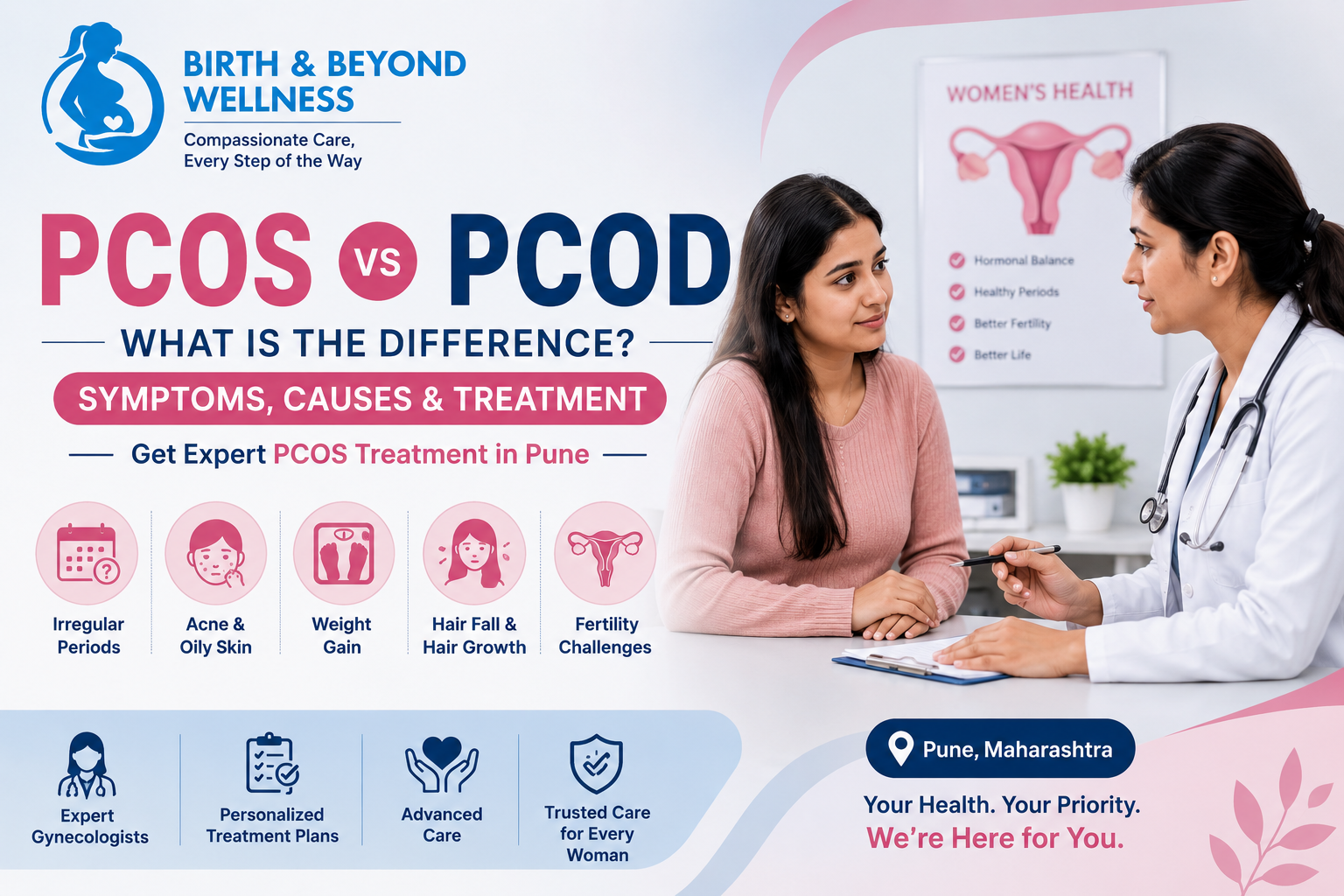
PCOS vs PCOD: What Is the Difference and When Should Women in Pune Seek Treatment? Recent post Early Signs of High-Risk Pregnancy Every Expecting Mother in Pune Should Never Ignore PCOS vs PCOD: What Is the Difference and When Should Women in Pune Seek Treatment? Can Delaying Pregnancy Affect Fertility? What Every Couple Should Know Menopause: Symptoms, Lifestyle Changes & Treatment Options Irregular Periods: Causes, Treatment & When to See a Gynecologist Uncategorized June 17, 2026 Dr. Navin Many women use the terms PCOS and PCOD interchangeably, but they are not exactly the same. Both conditions affect the ovaries and hormonal balance, yet they differ in severity, causes, and long-term health implications. With increasingly sedentary lifestyles, stress, poor sleep habits, and dietary changes, cases of PCOS and PCOD are rising among women in India. Seeking timely PCOS Treatment in Pune can help manage symptoms effectively and prevent future complications. Understanding these conditions can help women make informed decisions about their reproductive and overall health. What Is PCOD? PCOD (Polycystic Ovarian Disease) is a condition where the ovaries produce immature or partially mature eggs, which eventually turn into cysts over time. Women with PCOD may experience hormonal imbalances that can interfere with normal ovulation. PCOD is relatively common and can often be managed effectively through lifestyle modifications. What Is PCOS? PCOS (Polycystic Ovary Syndrome) is a metabolic and hormonal disorder that affects ovulation, fertility, and overall health. In PCOS, the ovaries produce higher-than-normal levels of male hormones called androgens. This can disrupt the menstrual cycle and affect multiple systems in the body. PCOS is generally considered more serious than PCOD because it may increase the risk of long-term health complications. PCOS vs PCOD: Key Differences PCOD PCOS Ovaries produce immature eggs Hormonal imbalance affects ovulation Less severe condition More complex endocrine disorder Lifestyle changes often improve symptoms Requires long-term medical management Fertility may be mildly affected Fertility can be significantly impacted Lower risk of associated diseases Higher risk of diabetes and heart disease Common Symptoms Women Should Not Ignore Whether it is PCOS or PCOD, several symptoms may indicate an underlying hormonal imbalance. Watch out for: Irregular or missed periods Excessive facial or body hair growth Persistent acne Sudden weight gain Difficulty losing weight Hair thinning or hair loss Darkening of skin around the neck Mood swings Difficulty conceiving Many women ignore these symptoms for years, assuming they are normal. Early diagnosis can make treatment easier and more effective. What Causes PCOS and PCOD? Several factors may contribute to these conditions. Common causes include: Hormonal Imbalance An imbalance in reproductive hormones can disrupt ovulation. Insulin Resistance Many women with PCOS have insulin resistance, causing elevated blood sugar levels. Genetics Family history may increase your chances of developing these conditions. Lifestyle Factors Lack of exercise, unhealthy eating habits, poor sleep, and chronic stress can worsen symptoms. When Should Women in Pune Seek Treatment? You should consult a doctor if: Your periods are consistently irregular You are struggling to conceive You are experiencing unexplained weight gain Acne persists despite treatment Facial hair growth is increasing You notice significant hair loss Early intervention helps prevent future complications such as: Infertility Type 2 diabetes High blood pressure Sleep disorders Heart disease Pregnancy complications How Are PCOS and PCOD Treated? Treatment depends on your symptoms, age, and future pregnancy plans. Management may include: Personalized diet plans Regular exercise routines Weight management programs Hormonal medications Ovulation support treatments Fertility guidance Regular monitoring Consistency is the key to successful management. Take Control of Your Hormonal Health Ignoring irregular periods or hormonal symptoms can impact your long-term health. The sooner these conditions are diagnosed, the easier they become to manage. Expert Women’s Healthcare at Birth & Beyond Wellness, Pune At Birth & Beyond Wellness, we provide comprehensive diagnosis, personalized treatment plans, and compassionate care for women dealing with hormonal imbalances, fertility concerns, and reproductive health conditions. If you are looking for PCOS Treatment in Pune, schedule a consultation and take the first step toward better hormonal and reproductive health.
Irregular Periods: Causes, Treatment & When to See a Gynecologist
Irregular Periods: Causes, Treatment & When to See a Gynecologist Recent post Menopause: Symptoms, Lifestyle Changes & Treatment Options Irregular Periods: Causes, Treatment & When to See a Gynecologist Irregular Period Treatment May 8, 2026 Dr. Navin Irregular periods are one of the most common concerns among women of all age groups. Many women experience changes in their menstrual cycle at some point in life, but understanding what is normal and what is not is essential for maintaining reproductive and overall health. This guide explains irregular periods in simple language — their causes, symptoms, treatment options, and when you should consult a gynecologist. What Are Irregular Periods? A normal menstrual cycle usually occurs every 21 to 35 days and lasts 3 to 7 days. Periods are considered irregular when: Occasional changes can happen due to stress or lifestyle factors, but persistent irregularity may indicate an underlying health issue. Common Causes of Irregular Periods 1. Hormonal Imbalance Hormones regulate the menstrual cycle. Any imbalance in estrogen or progesterone can disturb ovulation, leading to missed or delayed periods. 2. Polycystic Ovary Syndrome (PCOS) PCOS is one of the leading causes of irregular periods. Women may also notice: 3. Stress & Lifestyle Changes Mental stress, poor sleep, excessive exercise, or sudden weight loss/gain can disrupt hormone balance. 4. Thyroid Disorders Both hypothyroidism and hyperthyroidism affect menstrual regularity. 5. Pregnancy Missed periods may sometimes be the earliest sign of pregnancy. 6. Perimenopause Women approaching menopause may experience unpredictable cycles due to changing hormone levels. 7. Medical Conditions & Medications Conditions like diabetes, uterine fibroids, or certain medications can also influence menstrual cycles. Symptoms You Should Not Ignore Seek attention if you experience: These signs may indicate hormonal disorders or reproductive health issues that need medical evaluation. How Are Irregular Periods Diagnosed? A gynecologist may recommend: Early diagnosis helps prevent complications such as infertility, anemia, or hormonal disorders. Treatment Options for Irregular Periods Treatment depends on the underlying cause. Lifestyle Modifications Medications Fertility Treatment (If Needed) Women planning pregnancy may require ovulation-inducing treatments or specialized fertility care. Can Irregular Periods Affect Fertility? Yes — irregular ovulation can make conception difficult. However, the good news is that most menstrual irregularities are treatable when diagnosed early by a qualified gynecologist. Timely medical care significantly improves reproductive health outcomes. When Should You See a Gynecologist? You should consult a specialist if: Ignoring menstrual irregularities may delay diagnosis of conditions like PCOS, thyroid disorders, or uterine problems. Dr. Navin – Best Gynecologist in Kharadi, Wakad & Chandan Nagar, Pune If you are experiencing irregular periods, expert evaluation can help identify the root cause and provide personalized treatment. Dr. Navin is known as one of the trusted gynecologists serving Kharadi, Wakad, and Chandan Nagar areas of Pune. Dr. Navin offers comprehensive women’s healthcare services including menstrual disorder treatment, PCOS management, fertility guidance, pregnancy care, and preventive gynecological check-ups. If your periods are irregular, painful, or affecting your quality of life, timely consultation with an experienced gynecologist can help restore balance and confidence in your health.